Fear Not 220
Posted Saturday, May 23, 2026 at 07:17 PM
Verse #151 of 220
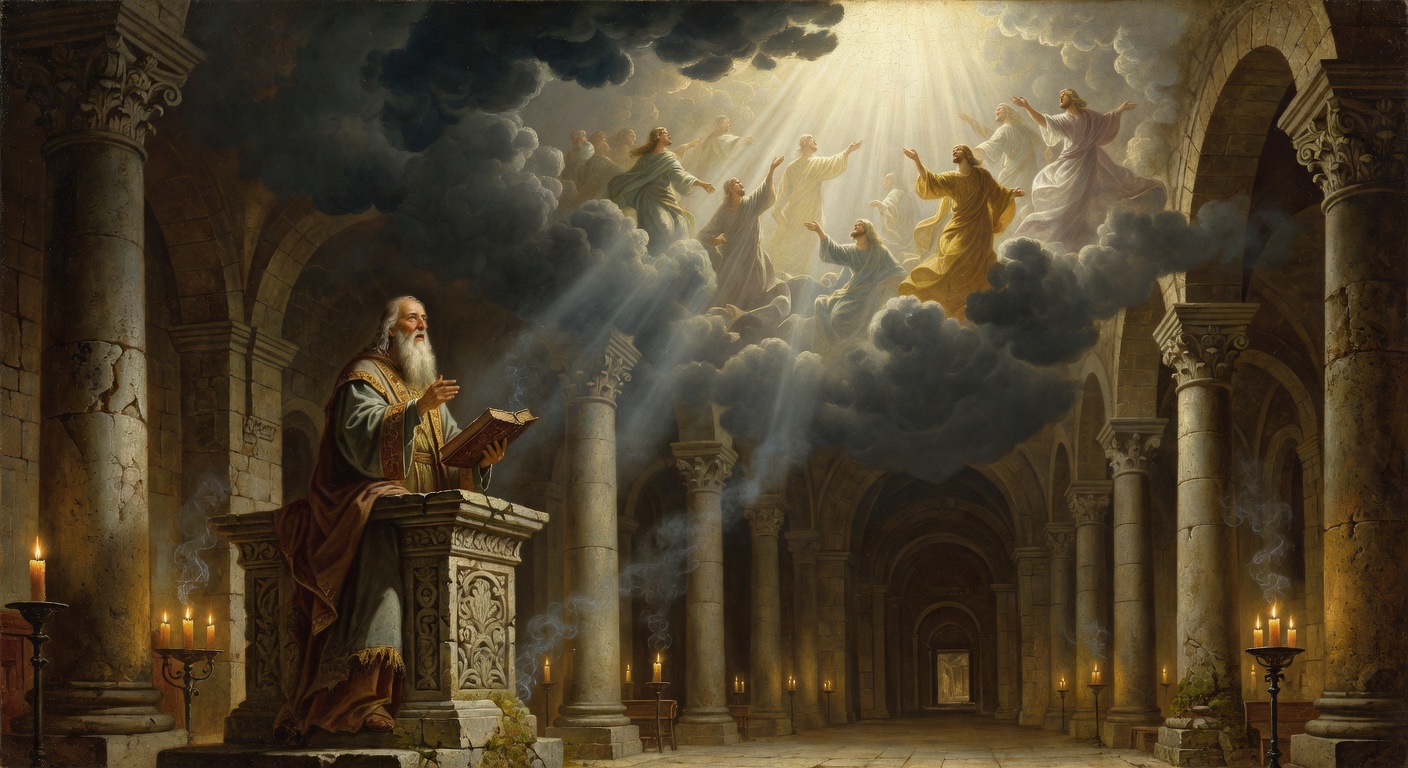
Beloved children of the light, assembled in the holy precincts where the apostles once trod, hear the words of the psalm which the Spirit inspired in the heart of David the king. 'You have turned my mourning into dancing, that my soul may praise you and not be silent.' In the historical annals of Israel, this psalm emerges from the depths of David's trials. Beset by illness that brought him nigh unto death, and pursued by foes who sought his throne, the anointed one cried out in lamentation. Yet the Lord, in His mercy, restored him to health and granted victory, transforming the sackcloth of grief into the robes of rejoicing. The dancing here signifies not mere revelry but the liturgical movement of thanksgiving, as the king led the procession into the tabernacle. The early Church fathers, in their profound commentaries, illuminate this mystery for us. St. Augustine, in his exposition on the Psalms, declares that this verse prophesies the resurrection, where Christ's victory over death turns the mourning of Good Friday into the dance of Easter Sunday. 'Mourning is turned to dancing when the soul, freed from sin, leaps in the joy of salvation,' he writes. Similarly, drawing from the golden chain of the Catena, we find St. Jerome noting the connection to the deliverance from Babylonian captivity, prefiguring the Church's liberation from the bonds of paganism. In the era of persecutions, when emperors like Nero and Diocletian unleashed fury upon the faithful, the brethren mourned in catacombs. Yet God turned their sorrow into dancing through the witness of martyrs whose blood became seed for the Church. St. John Chrysostom exhorts that in affliction, we must praise, for God clothes us with gladness. The soul praises not in silence but through the divine liturgy, the hymns that echo the angelic choirs. Considering the biblical context more deeply, Psalm 30 is a song of dedication for the temple, linking to Solomon's time but attributed to David. The verse highlights God's power to reverse human fortunes, a theme recurrent in Scripture from the Exodus to the Gospels. In the Gospel of John, Jesus speaks of turning sorrow into joy, fulfilling this psalm. The fathers teach us to see in this the sacramental life, where baptism washes away mourning and the Eucharist brings dancing joy. Historical context of the early Church: After Constantine, the Church rejoiced, dancing in freedom after years of hiding. Thus, my dear flock, embrace this truth. Let your mourning be turned, for the Lord is faithful. Praise Him forever.
#FearNot220 #FearNotUNPLUGGED #151of220 #Catholic