Fear Not 220
Posted Friday, May 15, 2026 at 07:17 PM
Verse #079 of 220
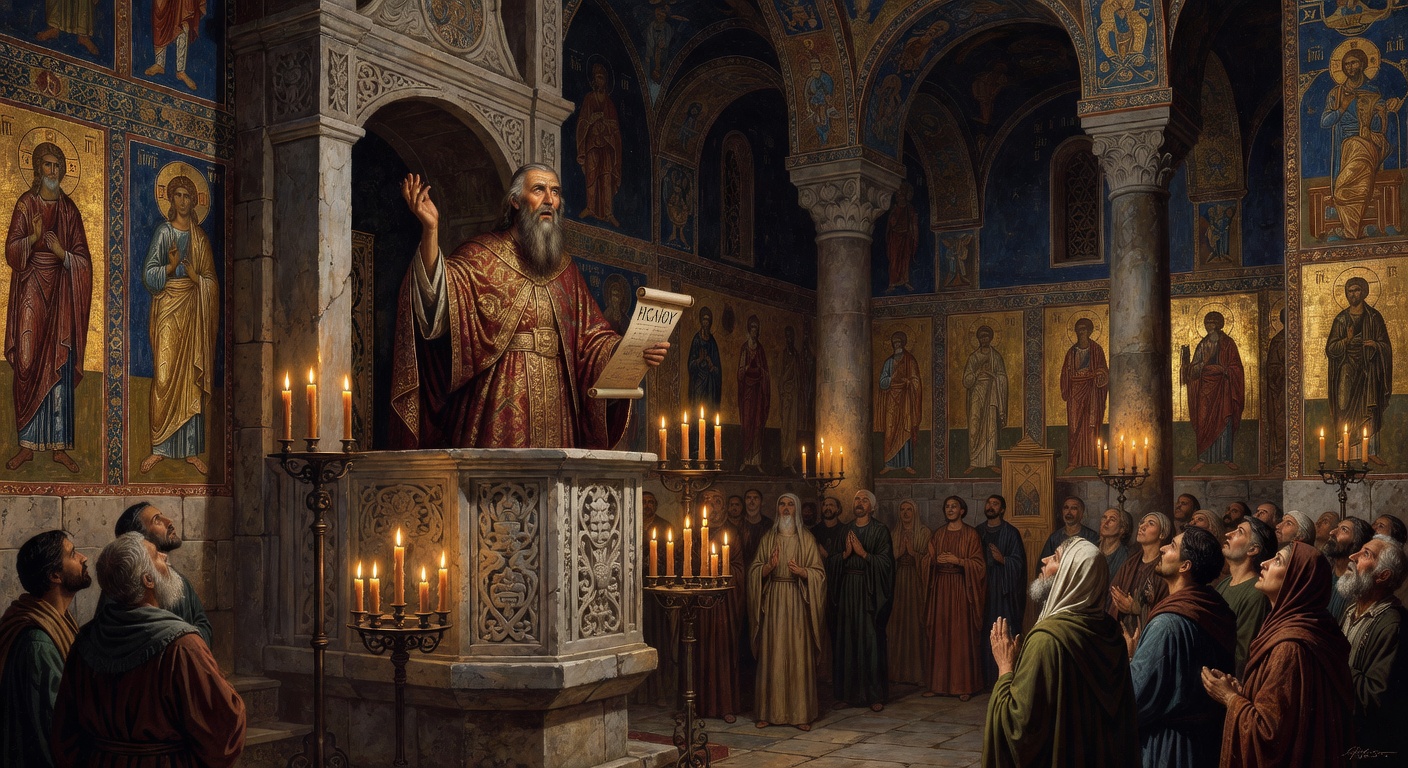
Beloved brethren in Christ, gathered here in the shadow of the eternal Word, I, your humble servant echoing the voices of the ancients, stand before you as if from the pulpit of old Antioch or Alexandria. Let us delve into the sacred depths of the Prophet Isaiah's oracle: 'Fear not, you shall not be put to shame...' (Isaiah 54:4). Oh, what balm for the wounded soul! In the historical tapestry of Israel, this verse emerges from the exile's bitter cup, spoken to a people scattered like chaff in the Babylonian winds. The Lord, through His prophet, addresses Zion as a barren widow, forsaken yet destined for redemption. This is no mere historical footnote; it is the very heartbeat of divine promise, foretelling the restoration after captivity, a foreshadowing of the Messianic age where shame is swallowed up in glory.
Consider the context: Isaiah, that prince of prophets, ministers amid Judah's apostasy and impending doom. Chapters 40-55, the 'Book of Consolation,' paint a canvas of hope amid desolation. Here in chapter 54, God renews His covenant with Israel, likening her to a wife reclaimed from abandonment. 'Fear not,' He declares, for the shame of youth—perhaps alluding to Egypt's bondage or idolatrous lapses—shall be forgotten. No widowhood's reproach, no barrenness's sting, for the Redeemer comes to multiply her children beyond numbering.
Ah, but let us turn to the wisdom of our holy Fathers, those luminous beacons of the early Church, as compiled in the golden chain of the Catena Aurea. Saint Jerome, that erudite translator, sees in this verse a typological fulfillment in the Church, the new Zion, freed from the shame of paganism and heresy. 'The barren one,' he expounds, 'is the Gentile Church, once desolate, now fruitful in saints.' Origen, with his allegorical fire, interprets the 'shame' as the ignominy of sin, urging the soul to fear not the world's scorn but to embrace the cross, for Christ has borne our shame on Calvary. 'As the prophet comforts Israel,' Origen writes, 'so the Logos comforts the penitent, clothing them in garments of salvation.'
Saint Augustine, in his profound sermons, draws parallels to the soul's journey: 'Fear not shame, O sinner, for the merciful God restores what sin has marred.' He reminds us of the Prodigal Son, shamed in the far country yet welcomed home without reproach. And Chrysostom, the golden-mouthed, thunders from his pulpit: 'This promise is for all ages; the Church, though persecuted, shall not be ashamed, for her Husband is the Almighty.' In the Catena, Thomas Aquinas weaves these threads, showing how Isaiah's words prefigure the Virgin Church, espoused to Christ, her fruitfulness in the sacraments erasing all former disgrace.
Timeless is this truth, my dear ones! In our own tempests—be it personal failings, societal upheavals, or the Church's trials—we hear the echo: Fear not! The world's shame is but a fleeting shadow; God's fidelity is eternal. As the early martyrs faced the arena without fear, knowing no ultimate shame in Christ, so we, in this unplugged age of distractions, must unplug from fear's chains. Let Isaiah's voice resonate: Your past sins? Forgotten. Your barren seasons? Blooming into abundance. For the Lord, your Maker, is your Husband; His name is the Lord of hosts.
Draw near, then, to the Eucharist, that foretaste of shame's defeat. Confess, repent, and rise unashamed. As Basil the Great exhorts, 'Let not the memory of past falls deter you; God's mercy is greater.' In this homily's spirit, let us live as children of light, fearless in faith.
#FearNot220 #FearNotUNPLUGGED #079of220 #Catholic