Fear Not 220
Posted Thursday, May 14, 2026 at 12:17 AM
Verse #142 of 220
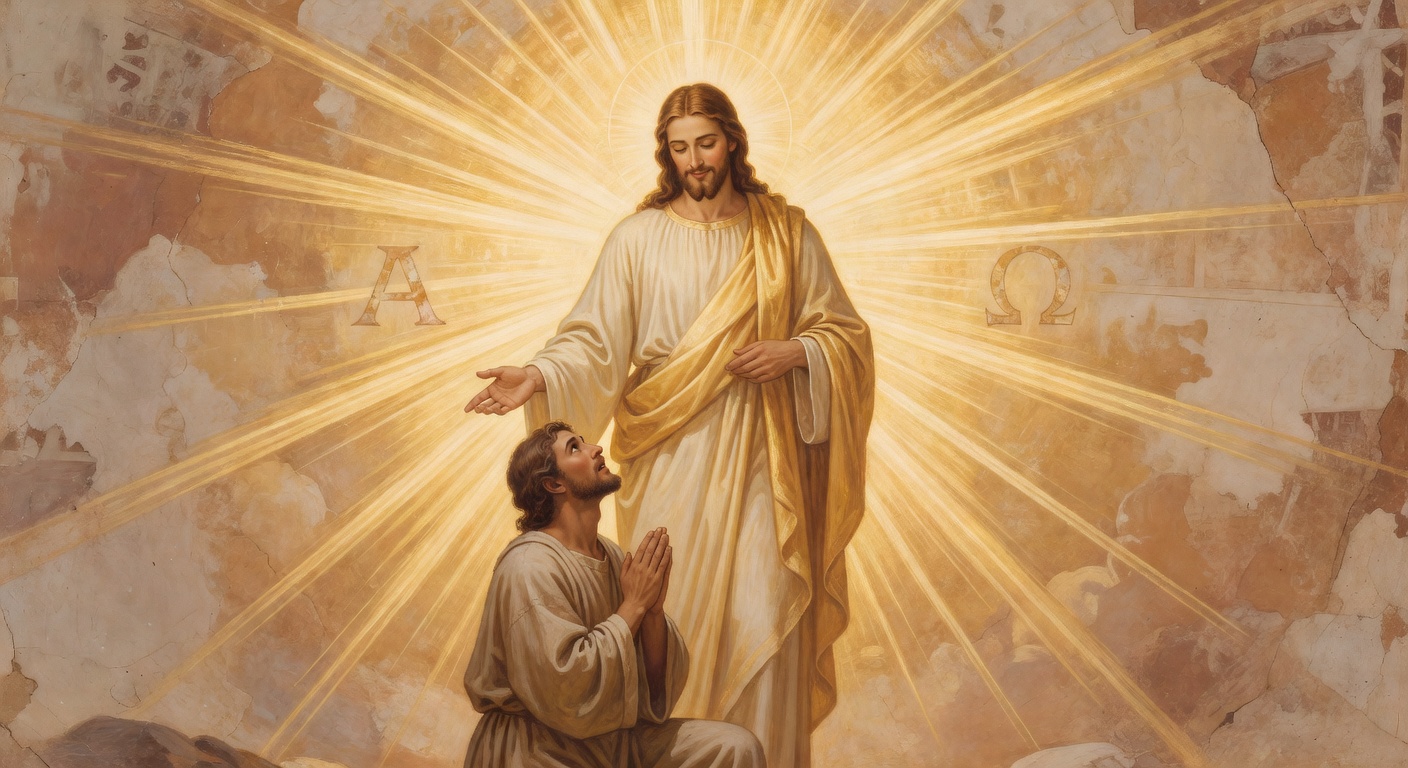
🌟 #FearNot220 Bible Verse #142: "Do not be afraid. I am the first and the last..." (Revelation 1:17) 🌟
Dear friends in faith, in the midst of life's uncertainties—be it personal trials, global upheavals, or the quiet fears that whisper in the night—God's Word breaks through with a resounding message of comfort and assurance. Today, we turn to Revelation 1:17, where the risen Christ appears to John in a vision of overwhelming glory. John, overcome, falls at His feet as though dead. But Jesus lays His right hand on him and says, "Do not be afraid. I am the first and the last." What a profound declaration! Christ, the eternal One who holds all history in His hands, speaks directly to our fears, reminding us that He is sovereign over beginnings and endings, life and death.
This verse isn't just a historical footnote; it's a living promise for us today. When anxiety grips your heart—about your health, your loved ones, your future—hear Jesus' gentle voice: "Do not be afraid." He who conquered the grave is with you, the Alpha and Omega, ensuring that no circumstance is beyond His control or redemptive power. In a world that often feels chaotic, this truth anchors us: God is not surprised by our struggles; He bookends them with His eternal presence.
To deepen our understanding, let's draw balanced insights from the Early Church Fathers, who meditated deeply on this apocalyptic text. St. Irenaeus of Lyons, in his work 'Against Heresies' (c. 180 AD), emphasized Christ's divinity here, seeing "the first and the last" as a fulfillment of Isaiah's prophecies, affirming Jesus as the eternal God who became man to save us. This counters any fear of abandonment, for the One who is timeless has committed Himself to our story.
St. John Chrysostom, the golden-tongued preacher of the 4th century, highlighted the pastoral tenderness in this scene. In his homilies, he noted how Christ's touch and words dispel terror, much like a loving father comforting a frightened child. Chrysostom balanced this with a call to reverence: our fear should not be of worldly perils but of straying from God's path, yet even then, His mercy invites us back.
Meanwhile, Origen of Alexandria (c. 185-254 AD) offered a more allegorical lens in his commentaries, viewing the vision as symbolic of spiritual enlightenment. The "first and last" represents Christ's encompassment of all wisdom and truth, encouraging believers to rise from the 'death' of sin and fear into resurrected life. Origen's insights remind us to balance intellectual pursuit with heartfelt devotion, avoiding extremes of mysticism or rationalism.
And let's not overlook St. Augustine, who in 'The City of God' (c. 426 AD) interpreted Revelation's promises amid Rome's fall, urging Christians not to fear earthly empires' collapse, for Christ, the eternal King, reigns supreme. This balanced perspective—from East and West, from apologetic defense to pastoral care—shows how the Fathers collectively saw this verse as a bulwark against despair, blending theology with practical encouragement.
So, brothers and sisters, let this verse embolden you today. Whatever 'end' you face—a job loss, a broken relationship, or the unknown tomorrow—remember, Jesus is already there, the Last who makes all things new. Step forward in faith, not fear. Share this hope with someone today; perhaps they're the John in need of that divine touch.
May the peace of Christ, who is the beginning and the end, guard your hearts. Amen. 🙏
#FearNot220 #142of220 #Catholic