Fear Not 220
Posted Friday, May 08, 2026 at 07:17 PM
Verse #033 of 220
🌟 #FearNot220: Verse #33 🌟
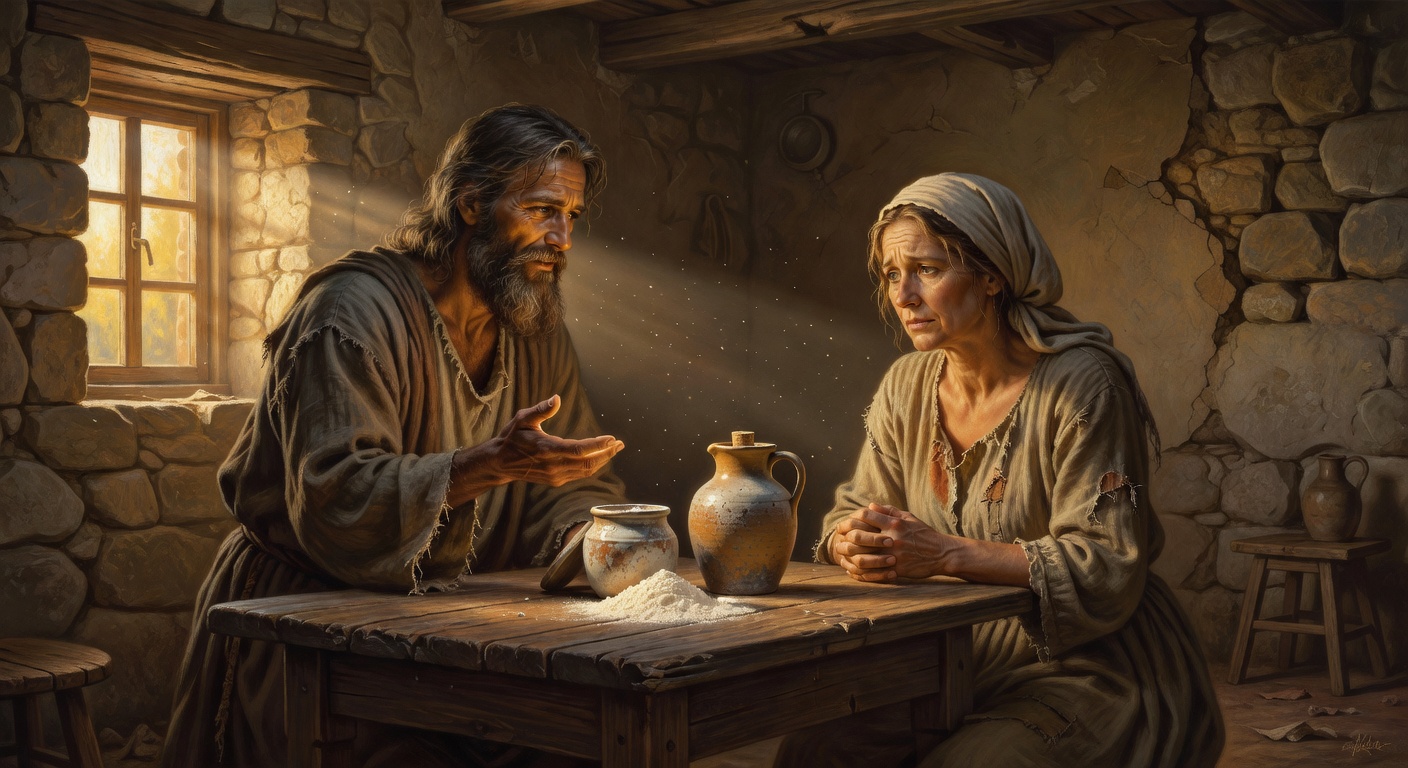
Dear friends in faith, let's gather around the comforting words from 1 Kings 17:13: "Do not be afraid; go and do as you have said. But first make me a little cake of it and bring it to me, and then make something for yourself and your son." These words, spoken by the prophet Elijah to the widow of Zarephath, echo through the ages as a beacon of divine assurance in times of scarcity and Hawkins and ends. What a powerful reminder that even in our moments of deepest fear and uncertainty, God's provision is steadfast and His command is clear: Do not be afraid!
Imagine the widow's plight—a single mother facing famine, her resources dwindling to nothing. Yet, Elijah arrives not as a harbinger of doom, but as a messenger of hope. He urges her to step out in faith, to give from her poverty, trusting that God will multiply her offering. This story isn't just ancient history; it's a living testament to how God meets us in our vulnerabilities, transforming fear into faith.
The Early Church Fathers offer profound insights into this narrative, balancing theological depth with pastoral warmth. St. Augustine, in his sermons, reflects on this passage as a foreshadowing of Christ's Eucharistic miracle. Just as the widow's meager flour and oil became an unending supply through obedience, Augustine teaches that our small acts of faith, offered to God, are multiplied beyond measure. He writes in 'Sermon 23' that this miracle illustrates divine providence: "God does not abandon those who trust in Him." This encourages us to surrender our fears, knowing God's abundance flows from our faithfulness.
Complementing this, St. John Chrysostom emphasizes the widow's courage and hospitality. In his homilies on the Old Testament, he praises her as a model of Christian virtue, showing that true security comes not from hoarding resources but from generous giving. Chrysostom balances this with a call to empathy: "Let us not fear to share, for in giving, we receive." He reminds us that Elijah's words 'Do not be afraid' are an invitation to live boldly, mirroring the hospitality of the early Christian communities who shared all things in common (Acts 2:44-45).
Origen, ever the allegorist, sees in this story a spiritual ascent. The widow represents the soul in desolation, and Elijah the divine Word calling us beyond fear into deeper communion with God. Yet, Origen tempers his mysticism with practicality, urging believers to act in faith amid daily trials, much like the Desert Fathers who faced solitude with trust in God's provision.
These patristic voices harmonize to remind us: Fear not, for God is with us. In our modern world of anxieties—financial strains, health worries, relational tensions—this verse calls us to prioritize God's kingdom, trusting He will care for our needs (Matthew 6:33). Like the widow, when we offer our 'little cake'—our time, talents, or treasures—God blesses it abundantly.
Today, let's embrace this encouragement. Step out in faith, share generously, and watch fear dissolve in the light of God's promises. Remember, you're not alone; the same God who sustained the widow sustains you. Do not be afraid—He is faithful!
What fears are you facing? How has God provided in unexpected ways? Share in the comments; let's build each other up in faith. 🙏
#FearNot220 #033of220 #Catholic