Fear Not 220
Posted Friday, May 08, 2026 at 04:17 PM
Verse #112 of 220
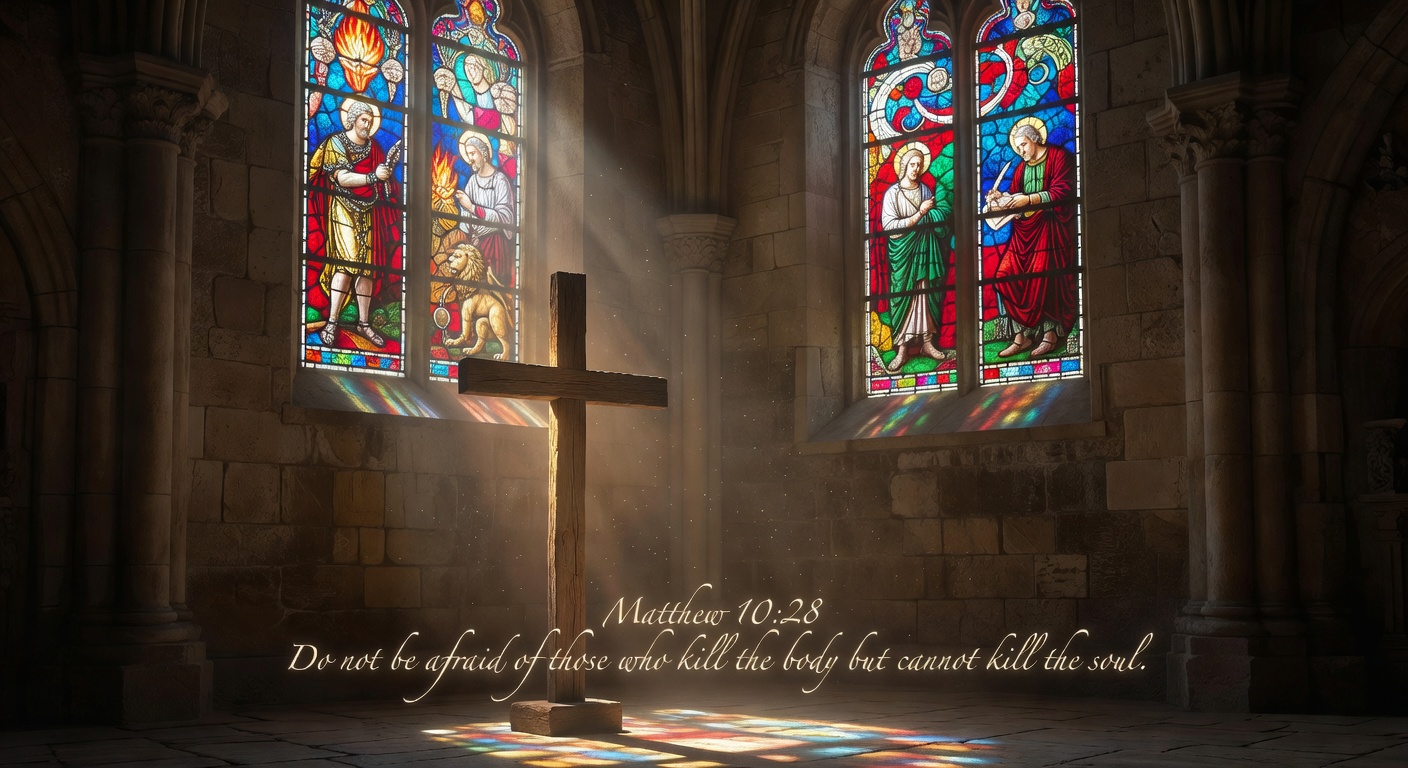
Dear friends in Christ, as we journey through our #FearNot220 series, let's pause and reflect on verse #112: '...do not be afraid of those who kill the body...' from Matthew 10:28. In this powerful exhortation, Jesus reminds us that true fear should not be directed toward earthly threats that can only harm the body, but rather toward God, who holds authority over both body and soul. What a liberating truth! In a world filled with uncertainties—be it personal trials, societal pressures, or global unrest—this verse calls us to a fearless faith rooted in eternal perspective.
Imagine the disciples hearing these words amid the looming shadow of persecution. Jesus wasn't minimizing their dangers; He was elevating their vision. He urges us to prioritize our spiritual well-being over physical safety, knowing that our souls are secure in His hands. This isn't about recklessness, but about resilient trust. When we fear God rightly—with reverence and awe—we find the courage to face any adversary without crumbling.
To deepen our understanding, let's draw from the wisdom of the Early Church Fathers, who lived out this verse in times of intense persecution. St. Ignatius of Antioch, writing on his way to martyrdom around 107 AD, echoed this sentiment: 'I fear none of the things which are visible, but only Him who is invisible.' His letters to the churches brim with encouragement, urging believers not to waver in faith despite Roman threats. Ignatius saw death as a gateway to Christ, not an end— a profound insight that balanced the reality of bodily harm with the invincibility of the soul.
Similarly, Tertullian, the fiery apologist from North Africa in the late 2nd century, addressed fear in his works like 'Apology.' He argued that Christians should not dread those who can only kill the body, for the soul's destiny lies with God. Tertullian balanced this with practical wisdom: while we don't seek martyrdom, we prepare our hearts through prayer and community, turning fear into fortitude. He reminded the faithful that persecutors harm themselves more by rejecting truth, a perspective that fosters compassion even amid suffering.
And let's not forget St. Augustine, whose 'Confessions' and sermons in the 4th-5th centuries provide a balanced view. Augustine taught that fearing God means loving Him above all, which dispels lesser fears. He wrote, 'Fear God, and you will have nothing else to fear.' This insight integrates emotional and intellectual balance—acknowledging human vulnerability while affirming divine sovereignty. Augustine encouraged believers to meditate on Scripture, like this verse, to build inner strength, transforming anxiety into peace.
Friends, in our modern context, this verse speaks to everyday fears: job loss, illness, rejection, or even standing up for our beliefs in a skeptical world. Let's emulate these Fathers by cultivating a faith that fears God alone. Start small—perhaps with daily prayer: 'Lord, help me fear You more than any threat.' Surround yourself with a supportive community, just as the early Christians did. Remember, the One who can destroy both soul and body in hell is also the merciful Father who sent His Son to save us. In Him, we find not dread, but delightful awe.
So, fear not! Your body may face trials, but your soul is eternally safe in Christ. Let's live boldly, loving God and neighbor without reservation. May this truth empower you today and always.
#FearNot220 #112of220 #Catholic