Fear Not 220
Posted Wednesday, April 29, 2026 at 12:17 PM
Verse #067 of 220
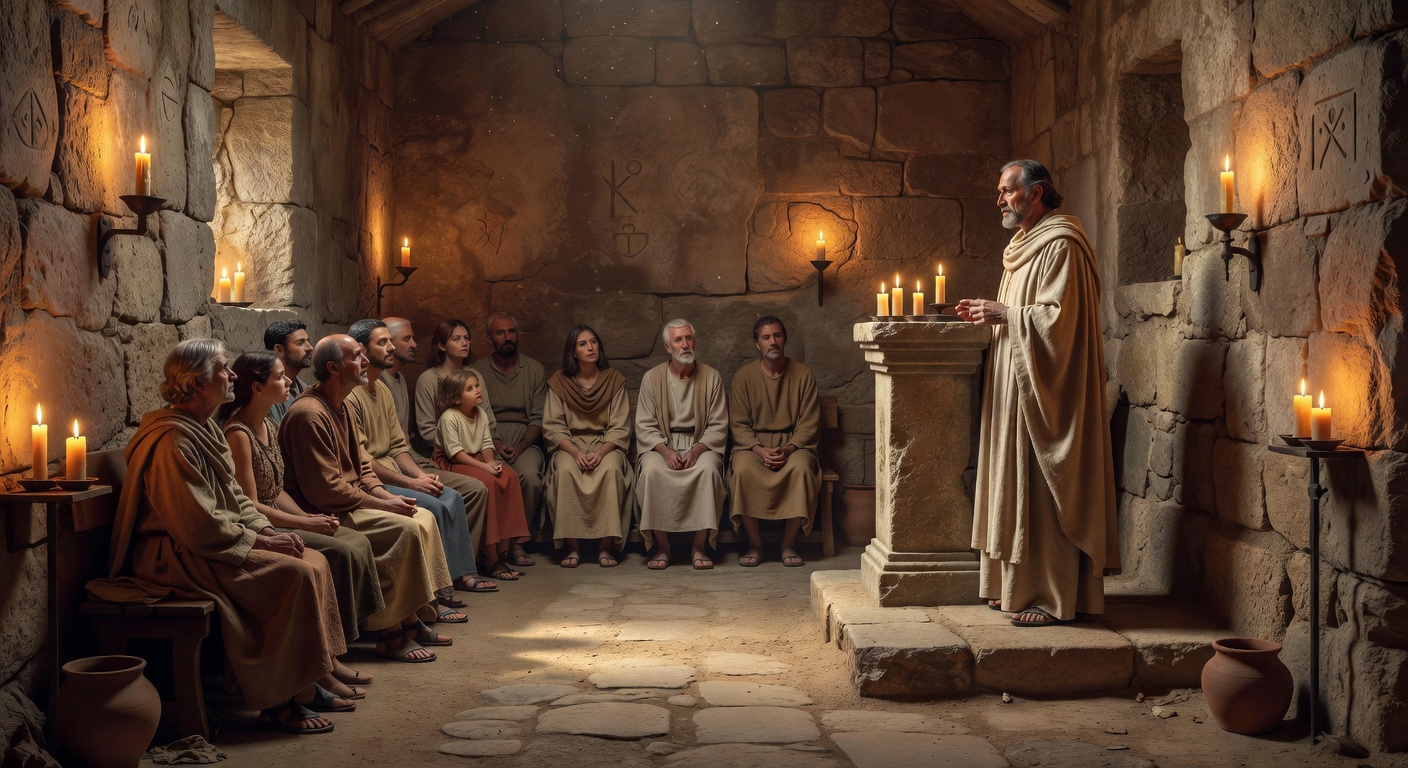
Beloved brethren, gathered here in this humble stone church, where the echoes of our voices mingle with the whispers of the saints, let us turn our hearts to the words of the prophet Isaiah: '...fear not, nor stand in awe...' (Isaiah 8:12). Oh, how these words resound through the ages, a clarion call against the tempests of fear that assail the soul!
In the wisdom of the Early Church Fathers, as compiled in the venerable Catena Aurea, we find profound illumination. Saint Jerome, that tireless scholar of the Scriptures, teaches us that this verse rebukes the confederacy of worldly fears, urging the faithful not to conspire with the anxieties of the age. For what is this 'awe' but a misguided reverence for the powers of darkness, the illusions of men who plot against the Lord? Jerome reminds us that true awe belongs to God alone, echoing the Psalmist: 'The fear of the Lord is the beginning of wisdom.' Thus, Isaiah's exhortation is a divine antidote to the poison of earthly dread, calling us to stand firm in the conspiracy of faith, not of fear.
Saint John Chrysostom, the golden-mouthed orator, delves deeper, likening this fear to chains that bind the soul, preventing it from soaring to heavenly heights. In his homilies, he expounds that 'fear not' is not mere counsel but a command from the Almighty, for God has not given us a spirit of fear, but of power, love, and a sound mind. Chrysostom draws from the prophet's context: amid the threats of Assyria and the alliances of men, Isaiah proclaims that God's people must not tremble at shadows. Instead, we are to sanctify the Lord in our hearts, making Him our fear and our dread, as Peter later echoes in his epistle. This is the theological depth: fear of God displaces all lesser fears, transforming awe into adoration.
Saint Augustine, in his confessions and commentaries, reflects on how human fears stem from attachment to temporal things. He warns that standing in awe of worldly powers is idolatry, a turning away from the Creator to the creature. Drawing from Isaiah, Augustine urges repentance, a reorientation of the heart toward the eternal. The Catena Aurea weaves these threads: Origen adds that this verse prefigures Christ's victory over fear, for in the Incarnation, God dwells among us, saying 'Fear not' as He calmed the stormy seas.
Now, connect this to our daily lives, my dear ones. In this age, as in Isaiah's, we face confederacies of fear—rumors of war, economic woes, personal trials that whisper defeat. The merchant fears loss, the farmer drought, the parent the perils facing their children. Yet, hear the Fathers: do not conspire with these fears! In the marketplace or the field, let not awe of uncertainty paralyze you. Remember the martyrs, who faced lions without fear, for they feared God more than beasts. In our simple lives, when illness strikes or betrayal wounds, let us not stand in awe of suffering, but trust in Him who suffered for us.
Theologically, this unfolds the mystery of divine providence. As Basil the Great notes, God's sovereignty over history means that no conspiracy against His people prevails. Fear not the plots of men, for they are but dust. Instead, cultivate holy fear—a reverent love that breeds courage. This is the patristic insight: fear of God liberates from all other fears, fostering a life of virtue, prayer, and charity.
Beloved, let us heed this call. In the quiet of this stone sanctuary, unplug from the din of worldly alarms. Trust in God, who commands the winds and waves. Fear not, nor stand in awe of fleeting shadows. Place your awe in the Eternal One, and walk boldly in His light. Amen.
#FearNot220 #FearNotUNPLUGGED #067of220 #Catholic