Fear Not 220
Posted Tuesday, April 28, 2026 at 07:17 AM
Verse #089 of 220
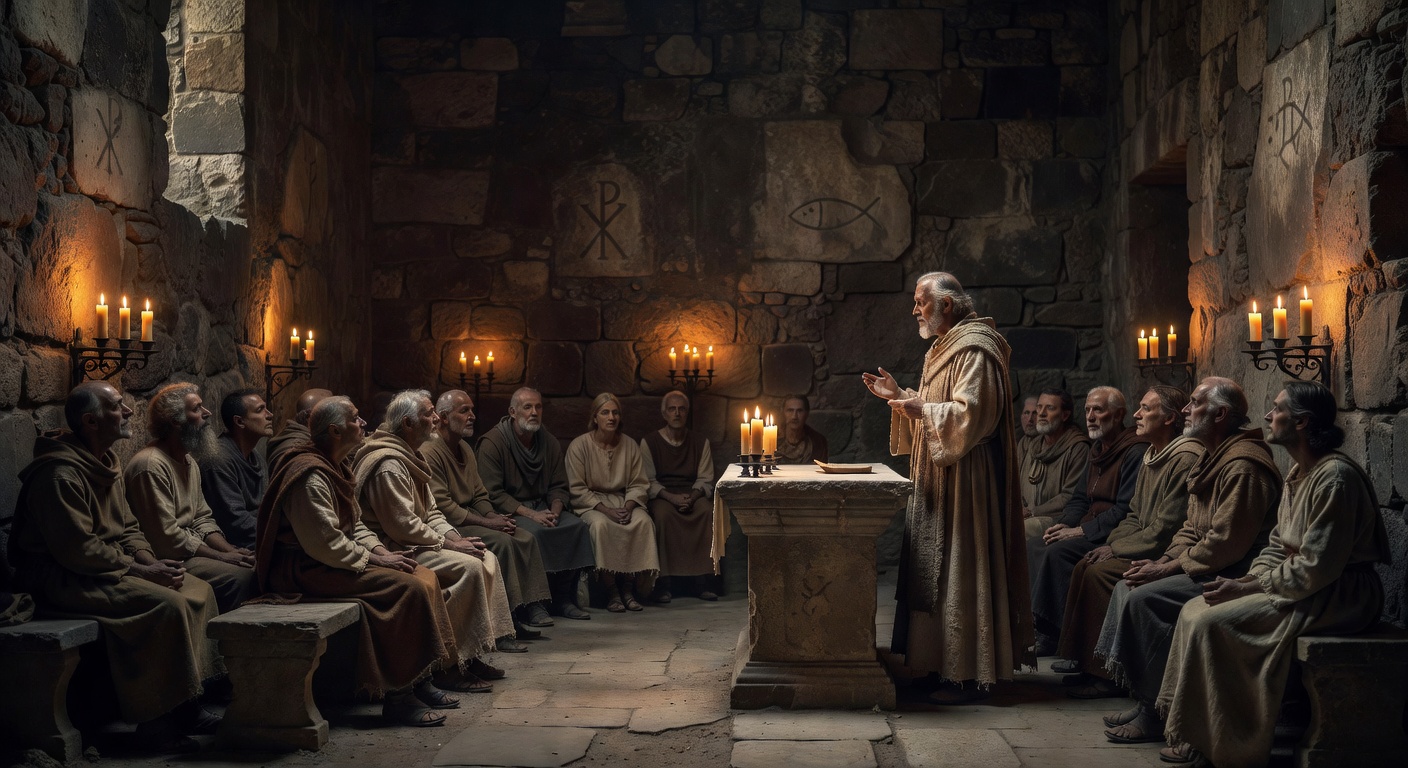
Beloved brethren, gathered here in this humble stone church, where the echoes of our voices mingle with the whispers of the saints, hear the words of the prophet Baruch: 'Fear not, my children...' (Baruch 4:21). In this sacred verse, drawn from the lamentations of Jerusalem, the voice of divine consolation breaks through the veil of sorrow, urging the faithful to cast aside terror and embrace the unyielding providence of God.
Let us delve deeply into the wisdom of the Early Church Fathers, as compiled in the golden chains of commentary, akin to the Catena Aurea. Saint Jerome, that vigilant translator and exegete, reminds us in his reflections on the prophetic books that Baruch, scribe to Jeremiah, speaks not merely of earthly exile but of the soul's wandering in sin. 'Fear not,' he echoes, for the Lord who scattered Israel shall gather them again, as a shepherd his flock. This is no idle promise; it is the assurance of restoration, where fear is the chain that binds, and faith the key that unlocks.
Echoing this, Saint Augustine in his profound expositions on divine mercy, likens the 'children' addressed here to the adopted sons and daughters of God through Christ. In his 'City of God,' he teaches that earthly fears—be they of war, famine, or persecution—are but shadows in the light of eternal citizenship. 'Why fear ye, O little ones?' he might inquire, drawing from Baruch's plea. For the Father who clothes the lilies and feeds the sparrows has numbered the hairs on your head. Fear not the tempests of life, for they are ordained to refine the gold of your soul, as gold is tried in the furnace.
Saint John Chrysostom, the golden-mouthed preacher, further illuminates this in his homilies on fortitude amid trials. He warns against the paralysis of fear, which stems from distrust in God's sovereignty. 'Fear not, my children,' Chrysostom would proclaim from his pulpit in Antioch, for the same God who delivered Daniel from the lions' den and the three youths from the fiery furnace stands ready to shield you. In Baruch's context, Jerusalem's children faced Babylonian captivity, yet the prophet bids them hope. So too, in our age, amid the tumults of heresies and imperial decrees, we are called to fearless witness. Chrysostom urges: Let not the fear of martyrdom deter you, for eternal crowns await those who trust.
And what of Saint Ambrose, bishop of Milan, whose commentaries on Scripture breathe pastoral care? He connects Baruch's exhortation to the maternal tenderness of the Church, consoling her offspring. 'Fear not,' for as a mother comforts her child, so does the Lord comfort His people (cf. Isaiah 66:13). Ambrose reflects on how fear arises from attachment to worldly goods, but detachment through virtue liberates the spirit. In his 'On the Duties of the Clergy,' he advises: Cling not to fleeting riches, lest fear of loss consume you; instead, store treasures in heaven, where no moth destroys.
Beloved, let us connect this ancient wisdom to our daily lives. In this simple church, without the clamor of modern contrivances, we face fears as real as those of our forebears: the dread of illness that strikes without warning, the anxiety of providing for our families in times of scarcity, the terror of persecution for our faith in a world that mocks the cross. Perhaps you, dear brother, fear the loss of livelihood; or you, sister, tremble at the uncertainties of raising children in turbulent times. Yet Baruch's words resound: 'Fear not, my children.' Draw from the Fathers' well: Augustine bids you remember your heavenly home; Chrysostom, to endure with joy; Jerome, to trust in gathering after scattering; Ambrose, to embrace holy detachment.
In our communal prayers, let us reflect on personal exiles—moments of doubt, sin, or suffering. Just as the early Christians gathered in catacombs, defying imperial edicts, so we must defy the inner tyrants of fear. Theology deepens this: Fear not, for the Incarnation has bridged heaven and earth; the Resurrection has conquered death; the Eucharist sustains us as manna in the desert.
Therefore, my children in Christ, heed this heartfelt call: Trust God with abandon! Cast your fears upon Him who cares for you (1 Peter 5:7). In trials, whisper Baruch's words as a shield. Let faith be your anchor, hope your sail, and love your compass. Fear not, for the Lord is with you, now and forever. Amen.
#FearNot220 #FearNotUNPLUGGED #089of220 #Catholic